A tribute to the writers who had to leave their homes in order to save their lives. With these exhibitions we try to rescue from oblivion both authors and works, in order to preserve their memory, which is part of the social and cultural history of Spain.
‘About the lost Spain. Authors of the exile in ‘Papeles de Son Armadans’ (‘Papers of Son Armadans’)
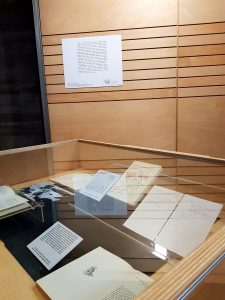
The exhibition pays tribute to the Galician writer and Nobel Prize winner for Literature Camilo José Cela, coinciding with the centenary of his birth. The exhibition recovers a series of original issues of the magazine `Papeles de Son Armadans’, a publication that the writer Camilo José Cela published since 1956 in Palma de Mallorca, which is his place of residence.
The exhibition, curated by Gonzalo Santonja, director of the Instituto Castellano y Leonés de la Lengua, recovers the history of this magazine “of literature and thought”, created by Cela with the idea of promoting a reunion with the authors of Spain in exile.
Roaming: Palacio de la Isla of Burgos. Palacio de la Audiencia (Soria). Adolfo Suárez and the Museo de la Transición.
‘From shadow to light. Eduardo de Ontañón (1904-1949)’
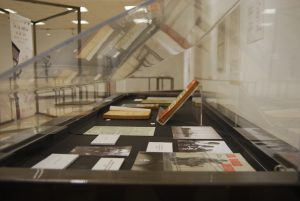
The exhibition represents a further step in the process of recovering the work of this journalist, poet and cultural agitator from Burgos, considered to be the mainstay of the literary avant-garde of the early 20th century in Castile and a full member of the’Generation of the Republic’.
The exhibition, curated by Ignacio Fernández de Mata, dean of the Faculty of Humanities and Communication at the University of Burgos, covers each of the stages – Burgos, the Civil War, exile – the works and commitments that shaped the life of this Burgos writer, editor, poet, biographer, journalist and cultural promoter.
Roaming: Teatro Principal. Burgos Casa de cultura. Aranda de Duero. Museo Histórico de las Merindades (Medina de Pomar (Burgos)
‘Gaya Nuño en el crisol’
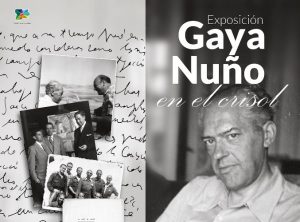
The exhibition ‘Gaya Nuño en el crisol’, pays homage to the work of the Soriano historian, art critic and writer Juan Antonio Gaya Nuño, born in Tardelcuende, Soria (1913). Gaya Nuño devoted a large part of his career to history and art criticism. His activities were stopped by the Civil War but they continued after his release from prison in 1943, with works such as ‘Historia y guía de los museos de España’ (1955), La pintura española fuera de España’ (1958),’La arquitectura española en sus monumentos desaparecidos’ (1961),’Arte del siglo XIX’ (1966),’Arte europeo de los siglos XIX y XX’ (1967) or’Historia de la crítica del arte en España (1975).
The exhibition recovers the figure of one of the most representative authors of his generation. ‘Gaya Nuño en el Crisol’ collects documentation, manuscripts, photographs, letters, unpublished materials, poetry books and a good part of his literary production.
Roaming: Palacio de la Audiencia (Soria); Palacio de la Salina (Salamanca). Oficina de Turismo Ampudia (Palencia).
‘Álbum de Berta Gamboa’
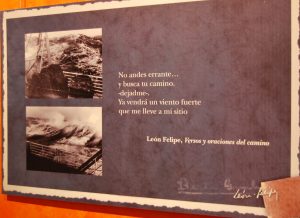
The Instituto Castellano y Leonés de la Lengua organised the exhibition ‘Album de Berta Gamboa’ with the collaboration of Zamora City Council. The exhibition pays homage to the Zamora poet León Felipe through the snapshots his wife took. This documentary collection, which is a permanent exhibition, is placed in the Provincial Historical Archive of Zamora.
We could find, more than eight dozen photographs on display, with daily scenes of the couple’s life, trips, public events and many snapshots of the Spanish Civil War, such as the bombing of the city of Madrid, the Prado Museum or the proclamation of the Second Republic at the Puerta del Sol in Madrid. In this tour it was possible to contemplate moments of great social tension, where Berta Gamboa had the courage to stand in the middle of the street and take photographs of great journalistic value.
Itinerancia. Centro Cultural La Alhóndiga (Zamora); Museo Adolfo Suárez y la Transición (MAST) de Cebreros (Ávila) y Ateneo de Madrid
‘Around 1931: From monarchy to republic (Magazines and authors)’
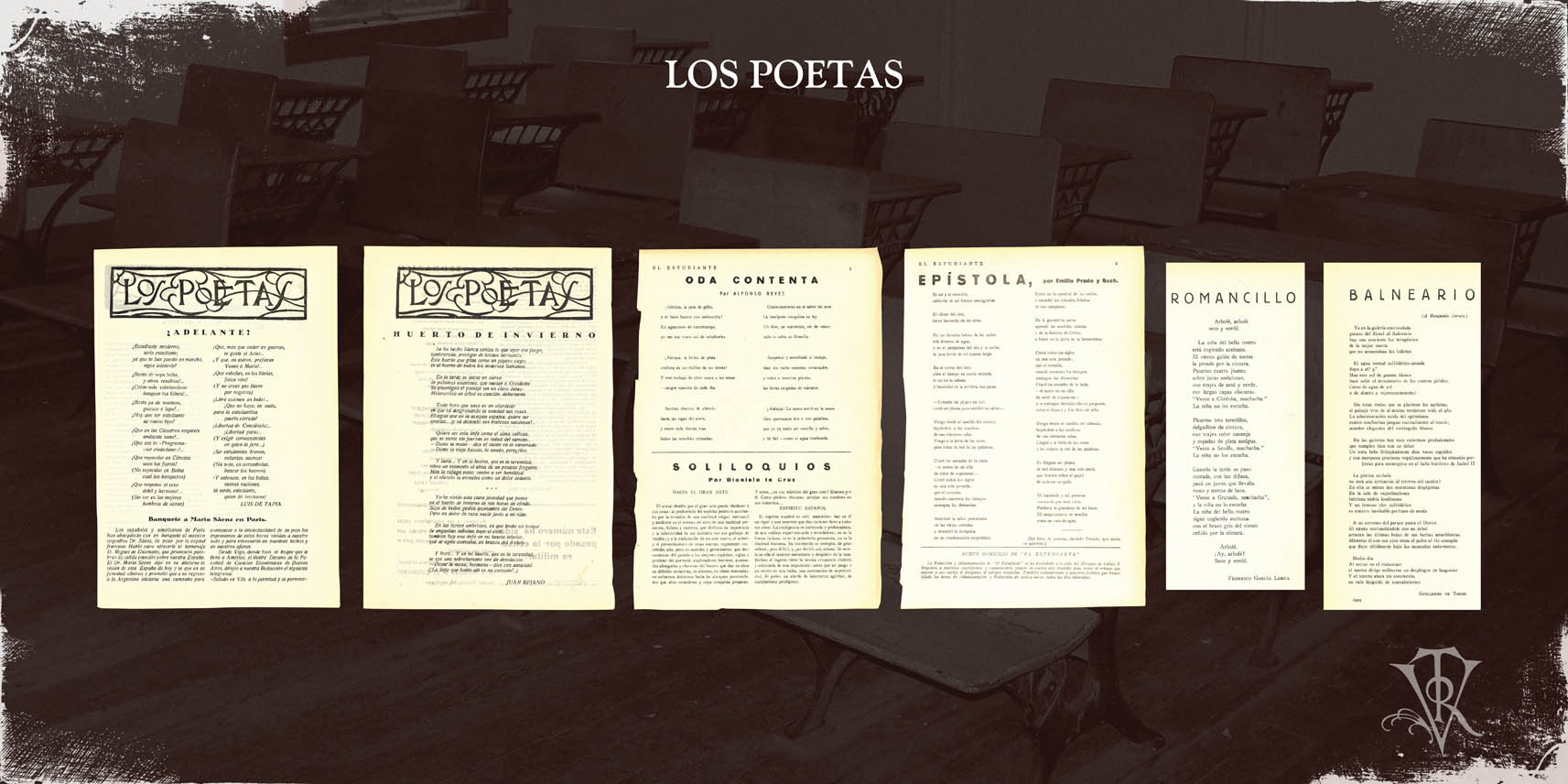
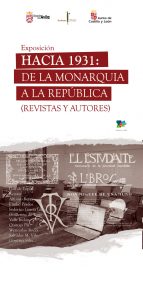 The exhibition included the complete collection of the magazine ‘El Estudiante’ from Salamanca. It focuses on recovering the history of the magazine ‘El Estudiante’, which was born in the capital of Salamanca on May 1, 1925, when the first issue of the “Spanish school youth magazine” was published by a group of students with a critical intention, a spirit of renewal, and under the design of modernity.
In its first stage (1 May-December 1925, 13 issues), Wenceslao Roces, José María Quiroga Plá, Salvador Vila and Rafael Giménez Siles, director and factotum of its second period, carried out in Madrid (December 1925-May 1926, with 14 issues published during this stage), fulfilled the essential functions, in addition to Miguel de Unamuno, among others, after the success of this publishing adventure.
Roaming: Museo Adolfo Suárez y la Transición, Cebreros (Ávila).
‘Renuevos de Cruz y Raya’
This is an exhibition that recovers the history of the second stage of this publication, founded by José Bergamín in exile in Chile and which is made up of 18 issues that were published between 1961 and 1965. In the showcases that make up this exhibition it is possible to see the originals, as well as paper copies. This publication includes both works and authors such as Landsberg, Herta Schubart, Manuel Abril, Martin Heidegger, Ramón Gómez de la Serna, Antonio Espina, Joan Fuster and Joan Maragall.
Roaming: Palacio de la Isla (Burgos) Auditorio municipal San Francisco (Ávila). Museo Adolfo Suárez y la Transición; Palacio de la Audiencia (Soria); Baltanás (Palencia).
‘Vértice Magazine’
The exhibition recovers the history of ‘Vértice’, the national magazine of the Falange’, a publication that emerged during the Civil War in San Sebastián in 1937. This publication brought together a wide range of intellectuals linked to Franco’s regime and also became ‘the showcase of Regime’ and gave literary and social prominence to the most valuable group of’new’ writers in Franco’s Spain, such as Rafael Sánchez Mazas, Víctor de la Serna, Ernesto Giménez Caballero, Álvaro Cunqueiro, Luis Rosales and José Luis López Aranguren.
Edgar Neville, Agustín de Foxá, Eugenio Montes, Alfredo Marquerie and Gonzalo Torrente Ballester, among others, also wrote in his pages.
Roaming: Museo Adolfo Suárez y la Transición, Cebreros (Ávila).
‘Hora de España Magazine’ and Antonio Machado
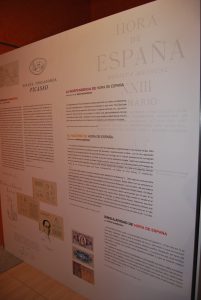
This exhibition recovers one of the most fascinating stories of 20th century Spanish journalism and literature. The public had the opportunity to know the tribute to a publication that emerged in the middle of the Spanish Civil War, which had the merit of becoming a reference for the republican intelligentsia of the time despite its ephemeral life. Created in January 1937 in the Valencian capital, the magazine’s editorial staff moved to Barcelona in 1938, where it disappeared in November 1938.
The exhibition brings together the copies of this publication, which the Sevillian intellectual Antonio Machado participated in. In addition, ‘Hora de España’ came to publish some books, which can be seen in this exhibition that pays tribute to a career that was considered an example of independence and creative freedom.
Roaming: Palacio de la Isla, Burgos; Becerril de Campos (Palencia); Centro Cultural San Agustín, El Burgo de Osma (Soria) Auditorio Municipal San Francisco (Ávila), Zamora. Miranda de Ebro, Valladolid. Palacio de la Audiencia (Soria); León.
‘Hora de España’ and León Felipe
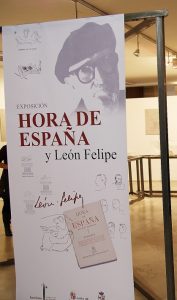
The exhibition ‘Hora de España’ and León Felipe is a journey through the history of the cultural magazine published during the Spanish Civil War by a group of exiled Spanish intellectuals. The effort that a group of Republican intellectuals set in motion, convinced as they were that culture could not and should not be stopped by the Civil War, resulted in the creation of this cultural magazine that managed to bring together a large part of the Republican intelligentsia of the time.
Two figures stood out especially in the history of this ephemeral magazine: the Sevillian intellectual Antonio Machado, who headed all the issues with an article by him, and the Zamorano León Felipe, whose signature was also a constant in this publication.
Roaming: Palacio de la Salina. Salamanca
‘Los libros de Ruedo ibérico o la libertad en el laberinto’
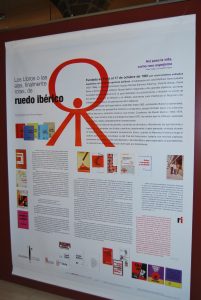
The exhibition ‘Los libros de Ruedo Ibérico o la libertad en el laberinto’, is a journey through the history of this publishing house created in France by Spanish exiles. The exhibition represents a recovery of the works published by the publishing house ‘Ruedo Ibérico’, founded in 1962 in Paris (France) by five Spanish refugees whose aim was to confront the Franco regime. The publishing house disappeared in 1982.
The books published by this publishing house did not always deal with Franco’s regime, since many of his publications focus on issues that concerned the intellectuals of the time, such as ecology, the situation in Cuba and China, the ideology of Leon Trotsky, Opus Dei and nationalism in Spain. A summary of a bibliographical set of works that gives an account of a very important period in the history of Spain, which goes from the last stage of Franco’s dictatorship to the first years of the transition to democracy .
Roaming: Instituto Castellano y Leonés de la Lengua. Palacio de la Isla (Burgos); Carrión de los Condes, (Palencia): Auditorio municipal San Francisco (Ávila).
‘España en el corazón. La cultura del exilio’. / ‘Clásicos en el exilio’
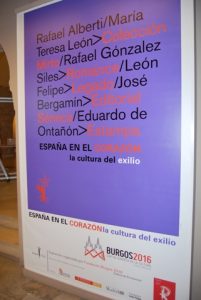
This exhibition recovers the work carried out by the Spanish intellectual exile in its attempt to normalize access to culture, despite the confrontation and division brought about by the Civil War. This new production made it possible to appreciate the work carried out by a large part of the Spanish culture and also to discover the relationships between writers and editors during this time.
Culture could not stop in times of war. Spanish intellectuals who were forced to leave Spain after the Civil War were convinced that cultural work could not and should not be stopped. The contest took away an important part of its best artists; writers and intellectuals who ended up developing their work in countries such as Chile, Mexico and Argentina. María Teresa León, José Bergamín, León Felipe and Rafael Giménez Siles occupied a prominent place in this new production, which recovered for the public documentaries, books, documents, handwritten letters and photographs, often contained in the’suitcases’ that dominate the exhibition.
Roaming: Arco de Santa María, Burgos; Casa de Cultura, Miranda de Ebro; Centro Cultural San Agustín. El Burgo de Osma (Soria); Saldaña (Palencia); Palacio de la Audiencia (Soria); Casa de Cultura Aranda de Duero.